Thursday, October 1, 2026

There was a time when saying “I don’t know” was an honest place to start. It wasn’t an admission of weakness. It was a signal that someone was willing to listen, to learn, to gather more information before drawing a conclusion.
That response has become harder to find.
Today, we are expected to have opinions immediately. Not informed opinions. Not well-considered ones. Just opinions. Quickly formed and confidently delivered. Hesitation is mistaken for ignorance. Questions are treated as disloyalty. Changing your mind is framed as inconsistency instead of growth.
Certainty, even when it is thin, is rewarded.
This shows up in everyday conversations. People feel pressure to take a side before they understand the issue. Nuance is tossed aside in favor of clean lines and firm positions. The person who speaks the loudest or the fastest often sets the tone, while the person who pauses to think is left behind.
Curiosity, once a strength, now feels risky.
Asking questions can be misread as opposition. Listening can be mistaken for agreement. Acknowledging complexity can be interpreted as avoidance. In that environment, it becomes easier to lock in a position early and defend it at all costs than to stay open to new information.
The cost of that shift is subtle but real.
When curiosity fades, conversations stop being about understanding and start being about winning. People listen just long enough to respond, not long enough to consider. Information is filtered for usefulness rather than accuracy. Over time, confidence grows while comprehension shrinks.
Communities feel the impact. Public discussions become less productive. Decisions feel rushed. Trust erodes, not because people disagree, but because fewer people feel heard. The space for honest dialogue narrows as certainty crowds everything else out.
None of this means strong convictions are wrong. They aren’t. Principles matter. Beliefs shape who we are and how we live. But conviction without curiosity hardens quickly. It leaves little room for correction, perspective, or learning.
There is a difference between being confident and being closed.
Curiosity doesn’t require abandoning beliefs. It requires holding them loosely enough to examine them honestly. It allows room for facts to complicate opinions, for experience to reshape understanding, and for people to arrive at different conclusions without being dismissed.
Progress has always depended on that balance. The willingness to question. The patience to listen. The humility to admit that we might not have all the answers yet.
Restoring curiosity doesn’t require sweeping change. It starts with smaller choices. Slowing down before responding. Asking one more question. Being willing to say, “I need to learn more about that.”
Those moments matter.
A community doesn’t need everyone to agree, and it doesn’t need everyone to be certain. What it needs are enough people willing to stay curious long enough to understand what they’re actually disagreeing about.
Certainty may feel satisfying in the moment. Curiosity, though, is what keeps us moving forward together.
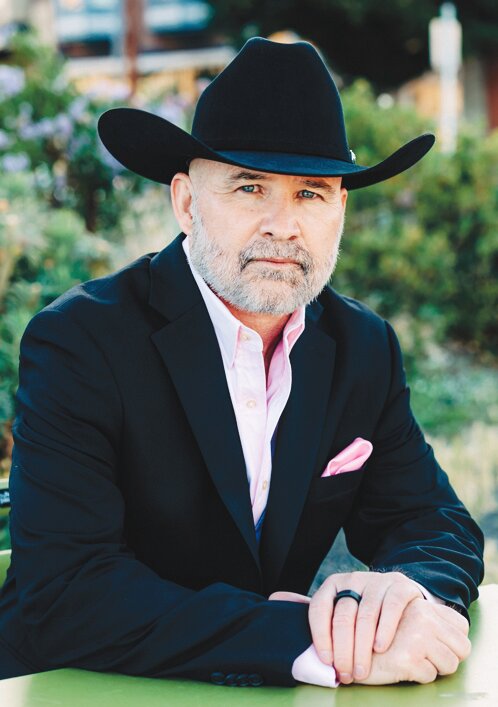
Terry Ward is the CEO of Ward Media and the publisher of NCW News, Cashmere Valley Record, Lake Chelan Mirror, The Leavenworth Echo, Quad City Herald, and the Wenatchee Business Journal. He can be reached at terry@ward.media.


1 comment on this item Please log in to comment by clicking here
PaulPalumbo
I love the themes in this post as well as in 'When belief comes first'. Both pieces encourage respectful listening and attentiveness as fundamental to communication and truth. They also offer an example of how to speak about and not demean anyone's strongly held beliefs or certainties. Well done.
Tuesday, January 27 Report this